
Neck stiffness, aching shoulders, or persistent lower back pain at your desk don’t have to be part of your workday. Many office workers in Aylesbury struggle with poor desk posture that worsens musculoskeletal pain over time. In this guide, you’ll find simple, practical posture correction tips and microbreak routines designed to ease discomfort and boost your wellbeing. Book your posture and workstation assessment in Aylesbury today, or enquire about our on-site or virtual workplace workshops. Learn more about good posture for office workers.
Ideal Desk and Chair Setup
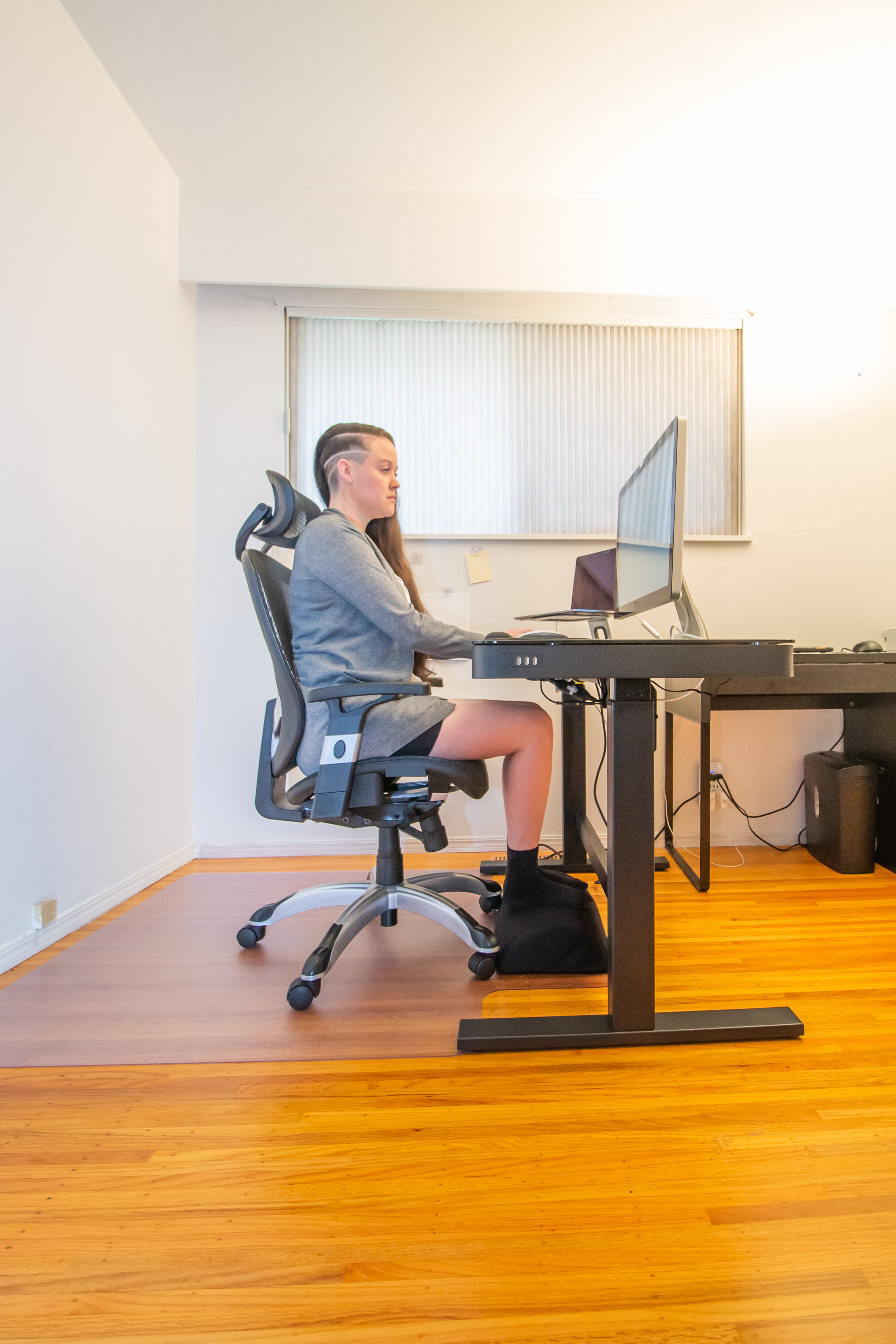
Creating the perfect workstation is crucial for minimising pain and increasing productivity. Let’s look at how your desk and chair can support a healthier posture.
Optimising Monitor Height
Did you know that the position of your monitor affects neck pain? If your screen is too low, you may find yourself craning forward. Placing the top of your monitor at eye level can prevent this, reducing strain on your neck. Adjust your monitor so that it sits about an arm’s length away from you. This distance ensures you can read text without leaning in. If you need to raise your monitor, use a stand or sturdy books. A well-positioned monitor helps maintain a neutral neck position, easing discomfort.
Correct Keyboard and Mouse Positioning
Your keyboard and mouse should be near, allowing your elbows to rest comfortably at your sides. Position your keyboard so that your wrists remain straight to avoid strain. Consider using a wrist rest to support your hands. Your mouse should be within easy reach, requiring minimal movement. This setup helps prevent wrist pain and encourages proper shoulder alignment.
Proper Foot Placement and Lighting
Your feet should rest flat on the ground or on a footrest. This placement supports your lower back and promotes circulation. Proper lighting reduces eye strain, so use a desk lamp or adjust your monitor’s brightness. Avoid glare by positioning your screen perpendicular to windows. These adjustments create an environment that supports your wellbeing.
Quick Posture Resets and Breathing Cues

Small changes can make a big difference in how you feel during work. Let’s explore posture reset techniques and how breathing can enhance your comfort.
Effective Posture Reset Techniques
Feeling stiff? It’s time for a posture reset. Stand up, stretch your arms, and roll your shoulders back. This simple move realigns your spine, easing tension. Another quick fix is the chin tuck. Gently pull your chin back, as if making a double chin. Hold this for a few seconds, then release. This exercise counters forward head posture and strengthens neck muscles. Regular resets keep your spine aligned and muscles relaxed.
Incorporating Breathing Cues
Deep breathing can transform your workday. When stress hits, inhale deeply through your nose, expanding your belly, then exhale slowly through your mouth. This practice reduces tension and refreshes your mind. Pairing breathing with posture resets enhances their effectiveness. As you stretch, breathe deeply to maximise the benefits. This combination helps maintain calmness and reduces muscle strain.
Benefits of Professional Physiotherapy

Sometimes, simple corrections aren’t enough. Physiotherapy can address deeper issues, providing the relief you need.
Identifying When You Need Help
Are home remedies not enough? If pain persists despite your efforts, it may be time to seek help. Frequent headaches, tingling in your fingers, or ongoing backache are signs your body needs professional care. A physiotherapist can assess your situation and recommend a tailored plan. Seeking help early prevents minor issues from becoming chronic problems.
Exploring Treatment Options at Physio Healing Hands
At Physio Healing Hands in Aylesbury, we provide expert care to relieve desk-related pain. Our treatments include K Laser therapy for soft tissue healing and cupping therapy for reducing tension. We offer personalised workstation assessments and workshops to educate on proper posture. Our goal is to empower you with the knowledge and tools to maintain a pain-free work life. Don’t wait for discomfort to worsen—consider professional support for your health journey.
By understanding and implementing these strategies, you can create a healthier, more comfortable work environment. Remember, small changes lead to significant improvements in your wellbeing.